Start checking the tempos of your favorite songs and you'll notice something almost eerie: the same number keeps showing up. 120 BPM. Over and over, across genres and decades. It's common enough that people half-joke about a "120 BPM conspiracy." There's no conspiracy, but the real reasons are fascinating, and they tell you something useful about your own music.
The number that won't go away
The data is clear: the most common tempo in modern pop is around 120 BPM, with the genre clustering in a 100–130 range, and the average tempo across eras hovers right around 120. House music's foundational tempo is ~120–128. A huge share of pop, dance, and electronic music lives in this narrow band. Why does music keep gravitating to this one speed?
Reason 1: it matches your body
The most beautiful reason is biological. A resting human heart beats roughly 60–100 BPM, and an active, excited, dancing heart climbs higher. 120 BPM is almost exactly double a calm resting pulse — and it sits right in the zone of an energized, moving body. Music at this tempo feels natural because it maps onto our own physical rhythms. It's fast enough to feel energetic, slow enough to stay comfortable. Your body, quite literally, is tuned to like it.
It's also a comfortable walking-to-marching pace. Humans have an innate sense of a "moderate" tempo, and 120 sits dead center — neither dragging nor frantic. It's the Goldilocks zone of musical speed.
Reason 2: the dance floor
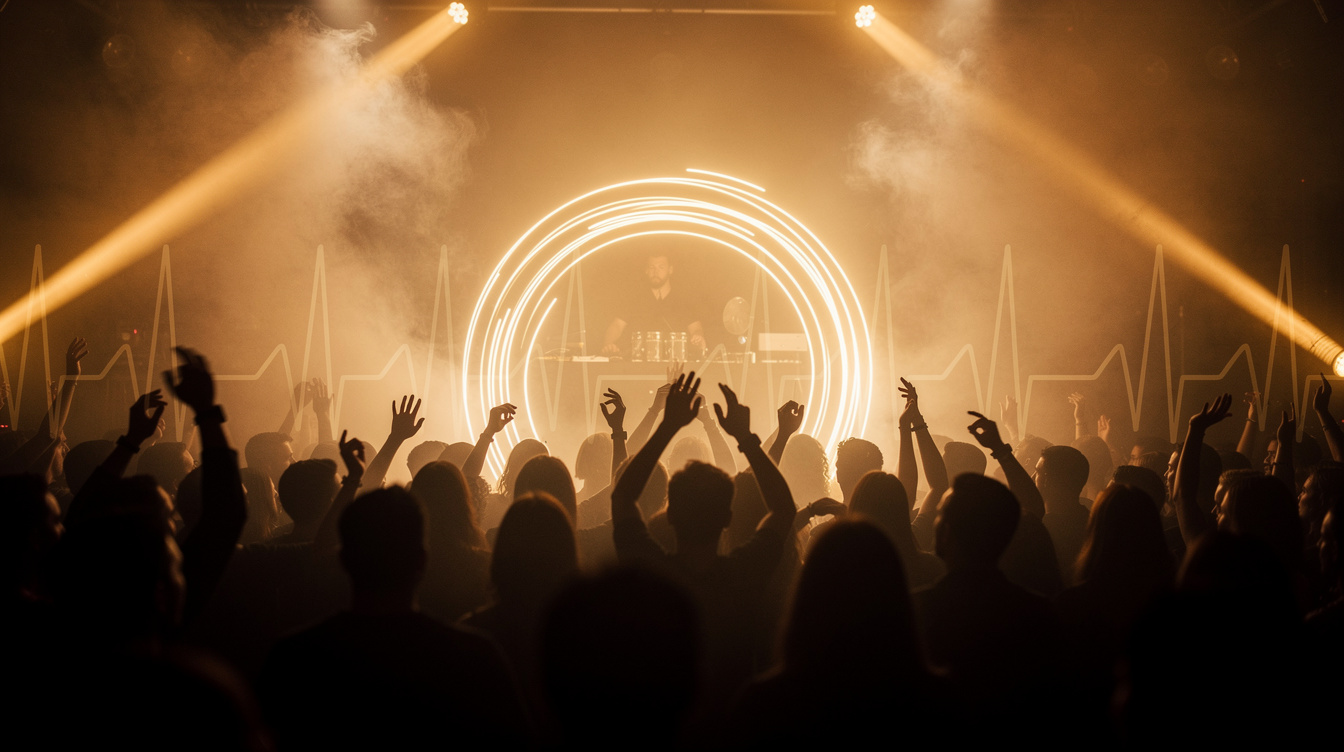
120 BPM became the heartbeat of dance music for practical reasons too. It's a tempo people can reliably dance to without exhausting themselves, and crucially, it's easy to beatmatch — DJs can blend tracks seamlessly when they share a tempo, so a common standard emerged so songs could be mixed together. Once house and club music standardized around ~120–128, that tempo radiated out into pop, which borrows heavily from dance music.
Reason 3: it's a safe, proven default
There's a more cynical layer too. Modern pop is engineered for mass appeal, and producers tend to work at similar tempos because it's a proven formula. When a tempo demonstrably works for the most people, the commercial incentive is to stay near it. Safe defaults become defaults precisely because they're safe.
Should you break from 120?
Knowing why a tempo is popular is exactly what lets you use it — or escape it — on purpose:
- Stay near it when you want energy, danceability, and instant familiarity. It's popular because it works.
- Slow down (70–90 BPM) for weight, intimacy, and space — the realm of a lot of hip-hop, ballads, and lo-fi. Slower tempos feel heavier and more emotional.
- Speed up (140+ BPM) for urgency and intensity — drum & bass, hardcore, frantic energy.
- Use tempo as identity. Part of an artist's signature can be consistently working at an unusual tempo. The speed itself becomes recognizable.
The point isn't that 120 is good or bad. It's that tempo sets the entire emotional character of a track before you write a single note (as we cover in the rhythm lesson). Choosing it deliberately, instead of defaulting to it, is one of the most powerful early decisions you make.
What you actually need to remember
- ~120 BPM keeps appearing because it matches an energized human pulse and a natural walking/dancing pace.
- The dance floor (and beatmatching) standardized it; pop inherited it.
- "Slow" trap/hip-hop is often fast-tempo music played in half-time.
- Tempo is an emotional choice — pick it on purpose, whether you embrace 120 or run from it.
Next time a song feels instantly "right," check its tempo — there's a good chance it's near the number your own heartbeat agrees with.
Ready to try it yourself?
Onomo is a full DAW in your browser — synths, drums, effects, and export. Free to start, nothing to install.
Set your tempo in the Studio