This is the end of Fundamentals — both volumes, twelve lessons, from "a note is a frequency" to borrowed chords. But one idea matters more than any single concept: theory you can only recite is useless. Theory in your hands is everything. This final lesson is about closing that gap, turning the knowledge into instinct.
Most people who "learn music theory" learn it as facts and then wonder why their music didn't improve. The facts don't improve your music. What improves your music is using them, hundreds of times, until they become automatic. So this lesson is less new information and more a battle plan.
See the theory in the piano roll
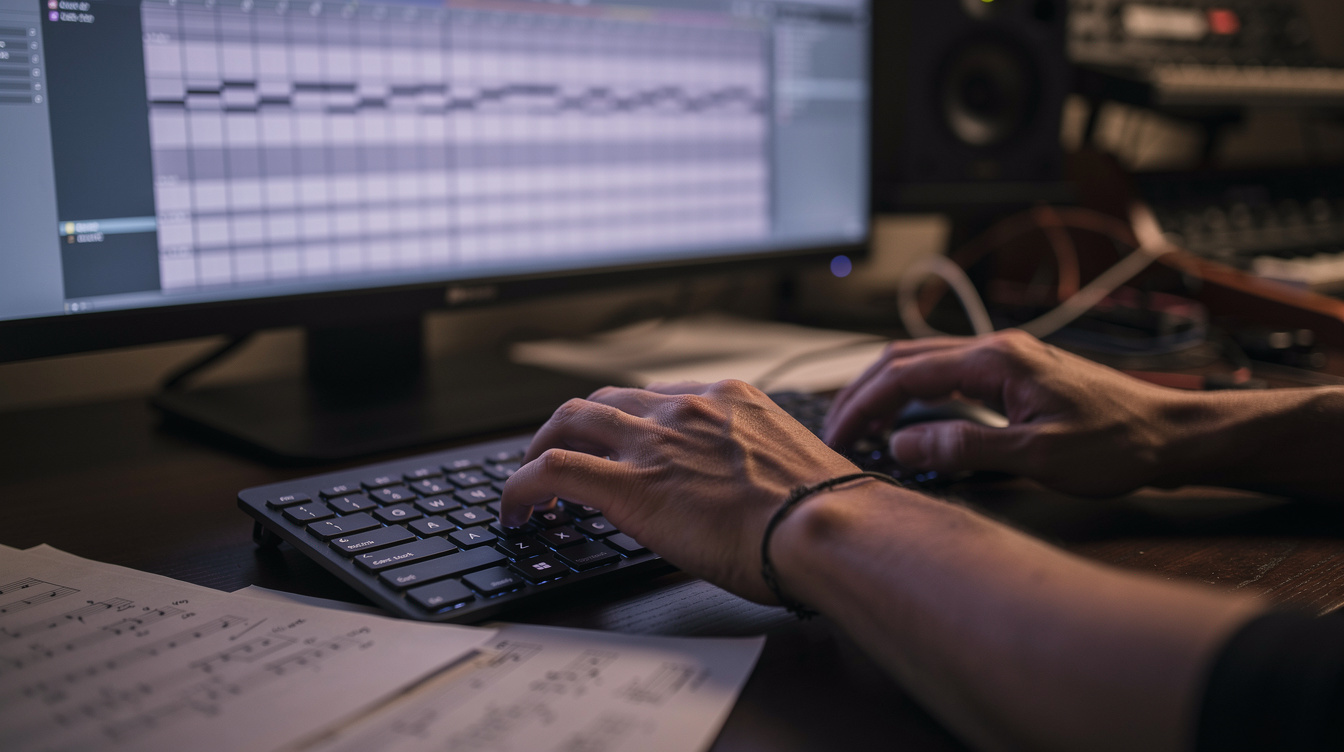
You don't need a physical piano to internalize this. Your DAW's piano roll is a music-theory diagram you can play. Everything from this course is sitting right there visually:
- The keyboard on the left shows the 12 notes repeating every octave — the black/white pattern is the map.
- A scale highlight (most piano rolls have one) shades your key's 7 notes so you can see, at a glance, which notes are "safe."
- A chord is a vertical stack — you can literally see the thirds stacked on top of each other.
- A progression is those stacks marching left to right across time on the grid.
- A melody is the single-note line weaving through it.
When you can look at a piano roll and read it — "that's a minor chord, that's the IV, that note's a passing tone" — the theory has moved from your head into your eyes. That's the first milestone.
The practice that actually builds instinct
Reading a course once teaches you of the concepts. Repetition teaches your hands. Here's a routine that turns theory automatic faster than re-reading ever will:
- One key, many loops. Pick a key and make ten short loops in it this week. Staying in one key until it feels like home teaches your ear the palette far faster than hopping around.
- Build every chord by hand at least once. Even with chord tools available, manually stack a root, third, and fifth a few times. Doing it physically wires it in; clicking a preset doesn't.
- Hum, then find it. Hum a melody, then hunt down the notes in the piano roll. This is ear training and theory at once — and it's the single most valuable musician skill.
- Steal and analyze. Take a progression from a song you love, recreate it, and label it in Roman numerals (Lesson 6). You'll learn more from reverse-engineering one great song than from any lecture.
- Add one color per project. Once the basics flow, deliberately use one trick from Lesson 11 — a borrowed chord, a sus, a key change — in each new track until it's reflex.
Use the tools — that's not cheating
A recurring theme in this course: let the software do the bookkeeping. Scale lock, chord generators, key detection — these aren't crutches that stop you learning. They're the equivalent of spell-check: they handle the spelling so you can focus on the writing. The producers who improve fastest use these tools while understanding what they do, so they can override them on purpose. Knowing the theory is what lets a tool make you faster instead of making you dependent.
The mindset that matters most
The most important sentence in twelve lessons: theory describes what already sounded good; it doesn't dictate what's allowed. Every "rule" in this course is just a pattern that listeners have responded to. They're starting points and explanations, not laws. The greatest music often comes from knowing the rules well enough to break them deliberately. Learn them so thoroughly that bending them becomes a choice, not an accident.
And the only way there is volume. Not volume of reading — volume of making. The research on skill is blunt and hopeful: improvement comes from focused, repeated doing, not from passive consumption (here's what the science actually says). You'll learn more theory by finishing twenty songs than by reading twenty articles — even these ones.
What you actually need to remember
| Idea | The one-line version |
|---|---|
| Piano roll = theory | Every concept in this course is visible on the grid. |
| Scale highlight | Turn it on — see your palette instead of memorizing it. |
| Build instinct | Make loops, build chords by hand, hum-and-find, analyze songs. |
| Tools aren't cheating | Let software do bookkeeping; know enough to override it. |
| Rules describe, not dictate | Learn them well enough to break them on purpose. |
That's the whole course. You went from not knowing what a note is to understanding how songs are built from first principles — and how to make that knowledge instinctive. There is nothing left to read. There is only the next project.
So open a blank session. Pick a key. Build a progression. Write a melody over it. Arrange it into sections. Add one bit of color. Finish it — even rough. Then do it again. That repetition, with these twelve lessons quietly informing each choice, is how you actually get good.
Go make something. That was always the point.
That's the complete Fundamentals course — 12 lessons across two volumes. Start over any time at Lesson 1, or browse the full Fundamentals series. And if finishing is your real obstacle, read How to Actually Finish Songs next.
Ready to try it yourself?
Onomo is a full DAW in your browser — synths, drums, effects, and export. Free to start, nothing to install.
Open the Studio and apply it