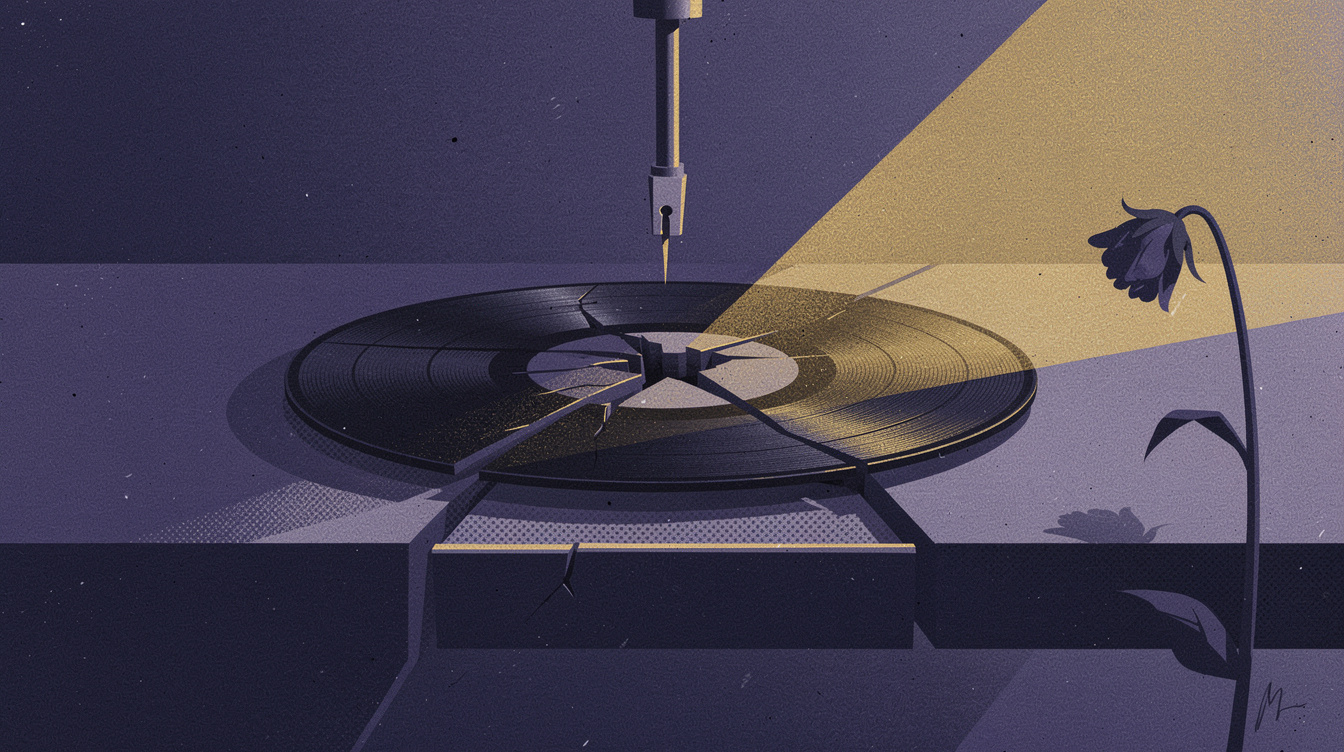
A producer you know — maybe a friend, maybe someone whose come-up you've quietly tracked — just blew up. Big placement, a song everywhere, the thing you've been grinding toward for years landing in their lap, or so it feels. You type "congrats!! so deserved 🙌" and you hit send. And underneath it, in a place you'd never admit to anyone, is something that tastes like acid: why them. why not me. I've been at this longer. I'm better than that. It's not fair.
Then comes the second wave, which is almost worse: the shame. What is wrong with me. What kind of person resents their own friend's success? I must be bitter. I must be a bad person. So you bury it, you say nothing, and the whole thing goes quietly toxic inside you.
The first thing you need to hear, plainly: you are not a bad person. You're a person who wants something badly and just watched someone else get it. That is one of the most human reactions there is, and pretending you don't feel it is what makes it dangerous. Let's actually deal with it — because jealousy, faced honestly, is survivable, and it can even be useful.
Everyone feels this. The good ones just don't pretend otherwise.
Start by dropping the idea that jealousy makes you uniquely petty. It doesn't. It makes you a musician with a pulse.
Every artist you respect has felt the exact churn you're feeling — the spike of why them when a peer pulls ahead. The generous-seeming ones, the ones who post warm congratulations and seem genuinely happy for everybody, are not people who never feel envy. They're people who've learned what to do with it. The difference between an artist who's eaten alive by jealousy and one who isn't has almost nothing to do with how much envy they feel and almost everything to do with whether they admit it, examine it, and put it to work — or bury it and let it rot.
Because buried is where it does the damage. Unspoken envy doesn't evaporate; it ferments. It curdles into resentment, into passive little digs, into a coldness toward someone who did nothing wrong but succeed. It poisons friendships, it poisons your enjoyment of your own work, and worst of all it convinces you to withhold — to not collaborate, not support, not show up — which cuts you off from the exact relationships and scenes that grow careers. The jealousy itself won't wreck you. Pretending you don't have it will.
The lie underneath it: the pie is not fixed
Now the deeper mechanism, because once you see it the whole feeling loses most of its teeth. Jealousy runs on a specific, false belief: that success is a fixed pie, and every slice someone else takes is a slice gone from you.
This is scarcity thinking, and in music it is simply wrong. Your friend getting a placement did not use up "the placement." A song blowing up did not consume a finite reserve of attention that was rightfully heading your way. There is no fixed quantity of musical success being handed out, where their win mathematically subtracts from your odds. The pie isn't a pie. It's not even close to a pie.
If anything, the opposite is true. When someone in your circle wins, the entire scene around them gets more visible, more credible, more alive. Their audience becomes a doorway to your music. Their proof that "someone like us can do this" is proof that you can too. Scenes rise together — that's the actual historical pattern. The artists who came up alongside each other, championing each other, pulling each other up, did far better collectively than they ever would have circling each other like rivals over an imaginary finite prize. Another artist's success is not your failure. It is, more often, evidence that the door you're knocking on actually opens.
The scarcity story feels true because it's built on fear, and fear is loud. But it's a lie, and it's specifically the lie that turns a normal, useful pang of envy into a corrosive, friendship-ending resentment. You can put it down.
Turning it into fuel (and into genuine support)
Once you've decoded what the envy is telling you, you've got a choice about where its energy goes. It's a surprising amount of energy — jealousy is intense. You can let it burn you, or you can route it.
Convert the sting into a specific action. The jealous feeling is raw motivation; it just needs an outlet that isn't rumination. Jealous they got placements? Today, send three pitches you've been putting off. Jealous of their output? Open a project and finish a verse. Jealous of their audience? Post the thing you've been too scared to post. Every time you feel the spike, treat it as an alarm that says do the work and immediately do one small piece of it. This is the flip: the same energy that, left alone, becomes bitterness becomes, redirected, the most propulsive force you've got. Resentment and ambition are the same fuel pointed in different directions. Point it forward.
Study them instead of stewing about them. That artist you envy is also, conveniently, a free case study in something you want to learn. How do they release? How do they talk to their audience? What did they do in the eighteen months before the "overnight" win? Curiosity and envy can't fully occupy your head at the same time — the moment you get genuinely interested in how they did it, the resentment loosens its grip and turns into education. Let the person who triggers you teach you.
Support them for real — and watch what it does to you. This sounds like moral advice; it's actually strategic and it works on your own head. Genuinely champion the artists you're tempted to envy — share their stuff, show up, mean the congratulations. Partly because the scene-rises-together thing is real and these are the relationships that carry careers. But also because of what it does internally: it's almost impossible to marinate in resentment toward someone you're actively rooting for. Real generosity is, among other things, a cure for the thing that's eating you. You can't be poisoned by envy of a person you're sincerely lifting up. Try it once and feel the difference.
The long-game truth
Step back far enough and the whole emotion reorganizes itself around one fact that, once you really believe it, makes jealousy almost impossible to sustain: you are not running their race.
There is genuinely no one else who makes music the way you do — your specific blend of taste, story, voice, and perspective is unrepeatable, which means the artist you envy literally cannot make your thing, any more than you can make theirs. So the "race" your jealousy is screaming about is imaginary. You're not on the same track losing. You're on entirely different tracks heading toward entirely different places. Their timeline is not your timeline; their chapter 20 standing next to your chapter 4 isn't a verdict, it's just two different points in two different stories.
And careers are long. The "overnight" success you're aching over almost always sits on top of years you didn't see — the same unglamorous grind you're in right now. Your turn, if it comes, will look "sudden" to everyone watching too. The artists who last aren't the ones who never felt jealous. They're the ones who refused to let envy talk them out of the long, consistent work, or out of the relationships that make the work matter.
So the next time a peer blows up and your stomach drops — don't fight the feeling, and for heaven's sake don't shame yourself for it. Feel it. Name it. Then ask it the only useful question: what do I want, and what's one thing I can do about it today? Send the congratulations and mean it. Then go make your thing. Their win was never your loss. It might just be a sign the door is open.
FAQ
Does feeling jealous of other artists make me a bad person? No. Envy when a peer succeeds at the thing you want is one of the most universal human reactions there is — every artist you admire has felt it. What matters isn't whether you feel it but what you do with it. Burying it in shame is what turns a normal pang into corrosive resentment; admitting it and examining it is what defuses it.
Why does another artist's success bother me so much, even a friend's? Usually because of scarcity thinking — the false belief that success is a fixed pie and their slice means less for you. In music that's simply not how it works: there's no finite reserve of attention being handed out, and a peer's win often makes the whole scene (and your odds) more visible, not less. Their success is not your failure.
How do I turn jealousy into something useful? Treat the envy as information. You only feel it about things you secretly want, so it's a map of your real desires — decode what specifically stings (placements? performing? output?) and point your effort there. Then convert each jealous spike into one immediate small action (send a pitch, finish a verse, post the thing). Same energy, aimed forward.
Should I support artists I'm jealous of? Yes — and not just because it's kind. Genuinely championing them is strategic (scenes rise together; these relationships carry careers) and it's also a cure for your own envy: it's nearly impossible to resent someone you're sincerely rooting for. Studying how they did it also turns resentment into education, because curiosity and envy can't fully share your head.
What if the jealousy won't go away? Keep returning to the long-game truth: no one makes music the way you do, so you're not actually in the same race — you're on different tracks toward different places, on different timelines. "Overnight" wins almost always sit on years of unseen grind, and yours will look sudden to others too. If the feeling ever curdles into something heavier that's affecting your wellbeing beyond music, it's worth talking through with someone you trust.
Their win was never your loss. Now go make your thing. There's more from Artist Life on the rest of the head game.
Ready to try it yourself?
Onomo is a full DAW in your browser — synths, drums, effects, and export. Free to start, nothing to install.
More from Artist Life